

- 4.9/5Google rating, 465 reviews (June 2026)
- LicensedSeptic installers and a master drain layer on the team, insured
- 3 in 1Sunflower Septic, Mulvane Septic and Mosley Septic, combined
- 24/7Emergency calls: “24/7/365 same-day service,” in Mosley’s words
Above and below the fence line
What’s under a Kansas yard.
Prairie on top, clay and limestone underneath, and a septic system doing quiet work in between, until it isn’t.
- 1
The house
Every drain in the house runs out one sewer line. A clog here looks like a septic problem but isn’t.
- 2
The tank
Scum floats, sludge sinks, the clearer water moves on. Pumping takes out what bacteria can’t.
- 3
The lateral field
Perforated pipe in gravel trenches lets the water soak into the soil, which finishes the cleaning.
- 4
The truck
Pumps through the main lid. Risers to grade make the next visit quicker.
- 5
Clay over limestone
Kansas clay swells wet and cracks dry; east toward the Flint Hills, rock and flint come up close.
What we do
Six jobs, one phone number.
- Sec. 1Septic tank pumpingRoutine and emergency pump-outs for household septic tanks, through the main lid.
- Sec. 2Septic tank cleaning & inspectionsA full clean-out plus a check of the tank, baffles and what the field is doing.
- Sec. 3Preventative maintenanceA pumping schedule and regular checks, so the system never gets to the backup stage.
- Sec. 4Septic system installation & replacementNew and replacement tanks and lateral fields, by licensed septic installers.
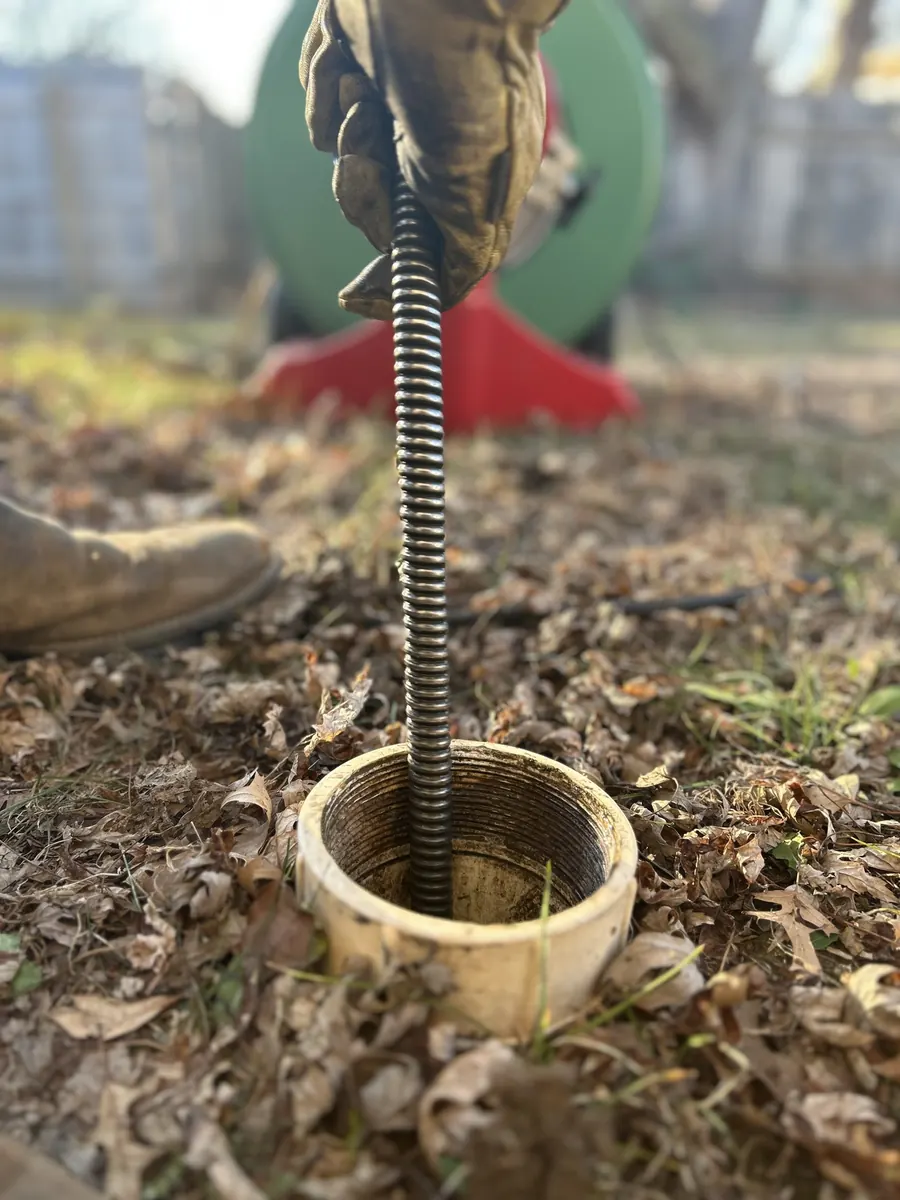
- Sec. 5Drain & sewer line cleaningClogged lines between the house and the tank, cleared with an auger or a hydro jetter.
- Sec. 6Grease trap cleaningPumping and cleaning grease traps for restaurants and commercial kitchens.
Why Mosley, in their words
Three local companies, one family-run crew.
Mosley Services is the result of combining Sunflower Septic, Mulvane Septic as well as Mosley Septic into one great company that serves Wichita, El Dorado, Haysville, KS and more.
- Licensed & insured
- “Our experienced team includes licensed septic installers, and a master drain layer all properly licensed & ready to serve you.”
- Family owned & operated
- “We are run by Wichita residents who are invested in our community, business, and the integral parts of our day-to-day operations.”
- Preventative maintenance
- “Our customers enjoy peace of mind, friendly service, and reliable septic inspections from our experienced technicians.”
A pump-out, mile by mile
What happens when the truck shows up.
Routine or emergency, the visit goes the same way.
(316) 777-4000- Mile 1
Call
Tell us the town, the problem and, if you know, where the lids are. If sewage is backing up, say so first.
- Mile 2
Find the lid
No risers? We locate the tank and dig to the main lid. Mark it afterward so the next pump-out is quicker.
- Mile 3
Pump it empty
Through the main manhole, never the small inspection ports, mixing the sludge so it all comes out.
- Mile 4
Look and explain
Tees, tank walls, the liquid level and what it says about the field, in plain words.
- Mile 5
Close it up
Lid secured, yard left clean, and an honest answer on when to pump next.
When to call
Six signs your septic wants attention.
- 01
A rotten-egg smell
A sulfur smell from the drains, stronger out in the yard near the tank.
- 02
Slow drains
Sinks, tubs and toilets that drain slowly all over the house, not just one fixture.
- 03
Water pooling in the yard
Soggy ground or standing water over the tank or the field, even in dry weather.
- 04
Sewage backing up
Water coming up in a floor drain, tub or the lowest toilet. Stop using water and call.
- 05
Gurgling pipes
Bubbling and gurgling after you flush or the washer drains.
- 06
Grass that’s too green
A strip of lawn over the tank or field that grows greener and faster than the rest.
Never enter a septic tank or lean into an open one. Septic gases and low oxygen can kill in minutes, rescuers included. Keep lids secured and children and pets away.
What customers say
Fast, friendly, straightforward.
Google reviews, quoted word for word. Mosley holds a 4.9 average across 465 Google reviews (June 2026).
“Absolutely the best septic service around! Mosley Septic truly lives up to their slogan: “No flush, don’t fuss—call us!” From the moment I called, they were fast, friendly, and incredibly professional. They showed up within 30 minutes, which honestly blew me away. My sewer line was completely clogged with roots, and they ran a 100-foot auger to clear everything out quickly and efficiently. They knew exactly what they were doing and explained things clearly along the way. …”
“I have had a wonderful experience with this company. Everywhere from calling the very nice lady who is very informational on the phone to the young gentleman that came and pumped my system. They were very honest and straightforward with me and I appreciated every minute of it. The price was phenomenal it was only $250. We had our entire septic tank pumped out.”
“Mosley Septic was amazing! They were fast in getting to my backed up septic tank at 8 pm. They came first thing in the morning to checked if anything was still clogged or if pipes needed to be snaked. I appreciated their professionalism, promptness, honesty, kindness and a job well done!”
Local knowledge
Field or lagoon? The soil decides.
Around Wichita, sandy river ground can take a lateral field; heavy clay usually gets a lagoon. Both start with a septic tank, and both need it pumped.
Where we work
Sedgwick and Butler County.
Straight answers
Septic questions, answered.
How often should I pump my septic tank in Kansas?
Every one to three years for most households, depending on how many people live in the house. That’s Mosley’s rule of thumb, and it matches K-State’s pumping table.
What are the signs my septic system needs service?
A rotten-egg smell, slow drains all over the house, gurgling pipes, water pooling over the tank or field, a strip of grass that’s greener than the rest, and sewage backing up. Those are the six signs Mosley lists.
Lagoon or septic field: what’s the difference?
Both start with a septic tank. With a septic field (lateral field), the water from the tank soaks into the soil through buried perforated pipe. With a lagoon, it flows into a shallow fenced pond where sun and wind treat it.
Who regulates septic systems in Kansas?
Counties, mostly. KDHE sets the state’s minimum design standards (Bulletin 4-2), and counties adopt sanitary codes that permit, inspect and license the work. Around Wichita that’s Sedgwick County’s MABCD and Butler County under its sanitary code.
What shouldn’t go down the drain on a septic system?
Grease and cooking oil, coffee grounds and eggshells, wipes and tissues, cat litter, feminine products and condoms, paint, solvents, pesticides and harsh chemicals. That’s close to the list Sedgwick County publishes.
How do I check a septic contractor in Kansas?
Ask the county. In Kansas, onsite wastewater installers are licensed at the county level under county sanitary codes, so call MABCD in Sedgwick County ((316) 660-1840) or Butler County to confirm an installer’s license.